February 2, 2026
You might be asking: Why The Avengers? Why a movie from way back in 2012? Because it is one of the better Marvel movies and rich with parts psychology, that’s why!
Reflecting myself within
Before I get into that, let me just say that I was a fan of the Avengers comics as a kid back in the late 70s into the late 80s, so I have a ridiculous amount of backstory information in my head. I have always been a fan of superhero teams.
My favorites back then, aside from the Avengers, were the X-Men, the New Teen Titans, the Legion of Superheroes, and the Fantastic Four. The team dynamics prefigured systems theory for me… people working together leveraging their different abilities who were stronger together than apart.
Every superhero team was an exemplar, or a macrocosm, of the inner workings of each one of us. We all had an inner Wolverine, an inner Cyclops, an inner Thor an inner Robin/Nightwing – in other words, we had an inner hero, a rebel, a good boy/girl, a thief, a victim, etc. We all related to the different characters for different reasons. The various personalities interacting were fascinating to me because they reflected the powerful dynamics within my own self.
Relating to superheroes
Comic books, as with fiction, television and film, invite the reader (or viewer) into a new and often fantastic universe. When I related to the main character, I engaged in a personal way. I believe this is why Marvel comics in the 1960s became so popular.
The audience related to a troubled Peter Parker (aka Spider-man) with all his personal problems. The audience related to the scientist Bruce Banner who was torn between his mild-mannered intellectual self and his inner rage externalized as the Hulk.
In the comics, the Avengers did not always get along, in fact they often squabbled with each other and had to work through interpersonal conflicts. As a reader I did not just enjoy the battles and the cool superpowers, I was immersed in the inner lives of the various characters.
When a superhero team works together, they discover that they have a common goal and that unity is better than chaos. They discover that a coordinated effort that leverages their different abilities has the best chance to defeat evil threats. The multiplicity inherent in a superhero team mirrors our inner world and our own need to achieve harmony between the inmost self and our parts.
[SPOILER WARNING: There are spoilers ahead related to The Avengers (2012) movie as well as other Marvel movies and television series that followed.]
How The Avengers came to be
Marvel’s The Avengers (2012), also simply referred to as The Avengers, was produced by Kevin Feige and Marvel Studios, written and directed by Joss Whedon, and distributed by Disney. It is actually the 6th movie in this first phase of the Marvel Cinematic Universe.
The previous movies (Iron Man, The Incredible Hulk, Captain America: The First Avenger, Thor, and Iron Man 2) told the individual tales of four of the characters who would become Avengers. This was a brilliant move, a truly choreographed effort, which culminated in these characters coming together for the first Avengers movie.
From a parts perspective, these first five movies told the story of four parts of the system, and this sixth movie brought the system together.
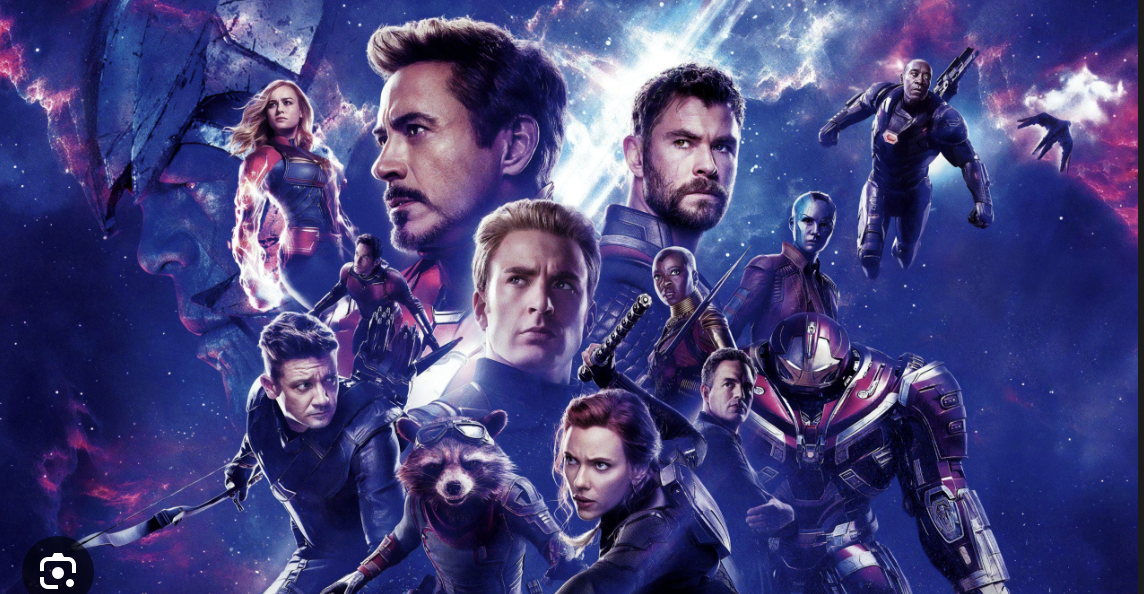
With an exceptional cast, the Avengers truly came to life both in their individual movies and in this 2012 blockbuster. Robert Downy Jr. brought layers to the complex character of Tony Stark/Iron Man who gradually evolves from narcissistic playboy to an altruistic leader. Chris Evans captures the likeability and earnest nature of Captain America. Chris Hemsworth brings the Norse god Thor to life in all his noble glory. Mark Ruffalo replaces Ed Norton and brilliantly brings a likeable reserve to his portrayal of the sensitive scientist Bruce Banner.
Newly introduced characters include Scarlett Johanson as Natasha Romanoff, the Black Widow, who amazes as the capable and tough Russian, and Jeremy Renner who brings a dark complexity to the character of Hawkeye.
Samuel Jackson takes the character of Nick Fury to new heights as the leader of the Strategic Homeland Intervention, Enforcement, and Logistics Division (SHIELD), the intelligence agency which creates the “Avengers Initiative” to protect the world from superhuman and otherworldly threats. In many ways Nick Fury is like the inner self, the leader of the self-system, who must assemble and manage the team while typically staying in the background.
Tom Hiddleston plays the brilliantly complex villain Loki. He is an Asgardian god and the adopted brother of Thor. In this movie he is primarily the archetypal villain, but we do begin to detect the impact of his own “demons” and the burden that he carries. He is the best example of a firefighter part and if you keep watching the movies and his own TV series, we see his unburdening and eventual transformation into a hero.
It was with delight then that I saw so many of my childhood favorite characters come to life in an engaging and true to form manner. The movie grossed over $1.5 billion. It was followed by three other high quality Avengers sequels: Avengers: Age of Ultron (2015), Avengers: Infinity War (2018), and Avengers: Endgame (2019) as well as other individual character sequels and many television series.
The basic storyline of The Avengers (2012) is that Loki invades the Earth to retrieve the Tesseract (a glowing blue cube which we learn later is the “Space Stone” and one of the six Infinity stones) for an alien army. In response, SHIELD Director Nick Fury assembles the “Avengers Initiative,” bringing together Iron Man, Captain America, Thor, Hulk, Black Widow, and Hawkeye. Initially divided by mistrust and SHIELD’s secrets, the heroes eventually unite following the death of Agent Coulson. Loki opens a wormhole over New York City, unleashing the Chitauri (a race of extraterrestrial cyborgs) fleet. The Avengers engage in a massive battle to protect the city. Iron Man intercepts a nuclear missile, destroying the alien mothership. Finally, the team subdues Loki, closes the portal, and saves the world.
The polarization of Iron Man and Captain America
Both Iron man (Tony Stark) and Captain America (Steve Rogers), like so many superheroes (e.g. Batman and Superman) lost their parents early in life. They each coped in different ways. Tony Stark, raised in privilege, became self-absorbed and entitled. Steve Rogers, bullied as a child, became the defender of the underdog.
I will not get into it too much here, but their individual movies set the stage for this coming together in the Avengers. Tony is on a journey of self-discovery as he realizes his calling is to use his privilege in a way that would help others. Steve Rogers is also on a journey where he must confront his naivety and face a world of difficult politics.
Both men are confronted with Nick Fury, the director of SHIELD, and where Tony is cynical, Steve is uncritical. Both men must find a middle ground… a way to work in the system to effect change and help those in need. As an aside, the conflict between both men comes to a head in Captain America: Civil War (2016) where Rogers ironically takes the anti-government position and Iron Man defends the government measures to hold superheroes accountable.
Initially, Iron Man, aka Tony Stark, is the prototypical firefighter in IFS terms. He is reactive and jaded. He seeks to protect the system by escaping. He turns to alcohol. He turns to women. He turns to his own self-sufficiency. This strategy is effective until he encounters a threat he cannot manage on his own.
We learn that Tony had a distant father who died when Tony was busy “acting out” as a spoiled teenager. He buries his feelings in a playboy persona and acts like he does not care about anything or anyone. In his own films, Iron Man experiences helplessness for the first time when his heart is damaged by shrapnel. The man who saves Iron Man, a man of faith, dies to save him. This “wounding” of Tony Stark’s heart leads to his own unburdening and inner transformation. When Iron Man sees that the missiles, which are about to kill innocent poor people, have his name on it (his company Stark Industries), he has a call to conscience.
Eventually, Iron Man learns to depend on and care for others. His self-sacrificing action at the end of the Avengers movie saves and protects the earth!
Captain America, played by Steve Rogers, lost his parents at a young age and was subject to bullying as a child and young adult. Transformed by the Super Soldier serum, Rogers stands up for the little guy and consistently stands against evil. When he arrives on the scene in the Avengers movie, it is after being frozen for decades. He is not in touch with current American politics or culture. He is the idealistic manager part trying to do the right thing.
Captain America sees Iron Man as prone to taking the easy path and causing unnecessary risks. He discovers, however, that Tony is not completely wrong for distrusting Nick Fury. In time he learns that he must stand on his own, even against the establishment if the establishment is immoral or unethical. These two parts, Captain America and Iron Man represent a polarization, a conflict, which nevertheless works toward integration during the various movies.
The parts of Black Widow and the Hulk
The Hulk is a fascinatingly complex character. Stan Lee and Jack Kirby, the creative duo who created the character back in 1962, were inspired by both Mary Shelly’s Frankenstein as well as Robert Louis Stevenson’s The Strange Case of Dr. Jekyll and Mr. Hyde.
The Hulk, like Frankenstein’s monster, is misunderstood and hunted by a fearful world. Like Mr. Hyde, the Hulk is the alter ego of a mild-mannered and good-natured scientist. Both of these classics explored the idea of having a “dark” or “shadow” side.
In the case of Frankenstein, the monster is the result of the doctor’s hubris and his desire to usurp the role of God. In the case of Dr. Jekyll, he wants to better understand the two “parts” of men – a good part and an evil one. He chooses to compartmentalize rather than to integrate his two parts. He wants the good part to be free of the burden of evil urges, and the bad part to be free to exercise vice without guilt or remorse. In the classic tale, Jekyll’s plan backfires as Mr. Hyde becomes more and more dominant until he eventually takes over.
As you might imagine, the story of Dr. Jekyll and Mr. Hyde could get its own parts analysis article. As it relates to the Incredible Hulk, Bruce Banner is in a constant state of trying to restrain the Hulk from taking over. We learn that he is constantly repressing his emotions, especially anger.
Bruce Banner battles two internal parts: the intelligent genius that is Dr. Banner, and the raw power of the unbridled Hulk. Where Bruce is considerate and careful, the Hulk is full of reaction and rage. For much of his story arc, Dr. Banner does his best to ensure that the green monster is treated as an exile and prevented from surfacing until called into action by ungovernable anger or fear. There is something about his constant anger that speaks to the inner life of many men. Like the Frankenstein monster in search of his bride, men need to be reconciled to their feminine side. Who helps the Hulk to soften? It is the Black Widow, of course…
The Black Widow has a fascinating story arc where she must reconcile and reform a dangerous part of herself. She had been taken as a child from her mother by a Russian spy ring and raised as a killer. When she realizes she was brainwashed and enabling evil, she uses her espionage skills and fighting prowess to defeat evil, only to discover later that she has been deceived again, this time by SHIELD.
We also learn in later movies that this inner conflict begins with her own conflict with her father. Perhaps like the Hulk, she is torn between her masculine ruthlessness and her feminine strength. She can be a duplicitous and manipulative spy, but she can also be sensitive, compassionate, resilient, and self-sacrificing as she helps others and even relates to and calms the raging Hulk. Her integration ark involves discovering her core self in relationship with the other Avengers. In Avengers: Endgame she sacrifices herself in Hawkeye’s place, an act of selfless love.
The resolution of a polarization between Black Widow and Hawkeye
The relationship between the two spies/agents, Natasha (Black Widow) and Clint (Hawkeye), also begins as a polarization. Hawkeye is sent on a mission to kill the Black Widow but in discovering each other’s trauma stories, they are each changed.
They realize that the “powers that be” treat them like disposable pawns. Natasha wants the opportunity to be something else. Where others would throw them away, they choose not to throw each other away. As Clint shows compassion for Natasha and offers her a path to redemption, she later helps him show compassion for himself.
These represent parts of the self-system learning to love each other rather than exile each other. There is a theme here of self-forgiveness as parts can offer gifts of understanding and support to each other. When parts make mistakes or get burdened (as Hawkeye does when he is possessed by Loki), they must learn to receive forgiveness.
The evolution of Thor and Loki’s purpose
Thor, the noble and near “perfect” warrior-hero is contrasted with his brother Loki who is the chaotic evil villain (contrasted with the lawful evil villain, Thanos) attempting to invade and conquer the Earth with an extraterrestrial army.
And yet, we learn that Loki’s evil path begins with early trauma. He was rejected as a baby by his own frost giant father and adopted by Odin. Despite this adoption, Loki is unable to receive that love and remains jealous of Odin’s biological son Thor. Loki never believes that he truly belongs. There is a powerful moment when Thor appeals to Loki, “Come home, brother,” and Loki momentarily considers it, but his heart is hardened and he rejects Thor.
Loki is that exiled part who copes with his pain by wanting to inflict pain on others. Loki is the “trickster god” who promotes chaos and has an insatiable desire for power. He is consumed by jealousy of Thor and his desire for affirmation from Odin.
In The Avengers (2012) Loki uses his spear to touch the heart of Hawkeye and take control of him. As Loki does this, he says, “You have heart” and Hawkeye’s eyes turn dark. Loki states, “Freedom is life’s great lie – once you accept that in your heart, you will know peace.” Then Loki touches Dr. Selvig’s heart and similarly takes control of him.
It is very symbolic that Loki takes “control” of someone by touching their heart as their core self is eclipsed by a part controlled by Loki, basically a demon/”god.” Meanwhile, Nick Fury says of Loki, “You say peace, but I think you mean the other thing” as Loki steals the Tesseract. Loki’s actual goal is domination and chaos. In terms of parts, it means a loss of true freedom and a loss of self.
Here we see the movie’s core parts-oriented themes which have to do with unity vs disunity and freedom vs conformity. The avengers learn to unite while respecting individuality. Loki attempts to divide while promoting conformity. In our own internal systems, we strive to respect our beautiful complex inner multiplicity while creating harmony and a shared united purpose under self-leadership.
We do not see it here in this movie, but as the Marvel movies and television shows progress, Loki transforms into a selfless hero who ultimately saves the multiverse by preventing the collapse of all the timelines.
This transformation only happens when he sees all the different destructive versions of himself from all the different timelines. He begins to care for others and chooses a new role. Instead of questing for unending power, his new “glorious purpose” is to save the multiverse. He ultimately sacrifices himself and discovers his “true” self as the eternal anchor of time.
Thor, in later movies, moves from a manager style role to a firefighter role when he becomes “fat Thor” or “bro Thor.” He enters a deep depression when Asgard is destroyed. He copes with his trauma, his loss, and his feelings of failure by turning to excessive consumption of food and binge drinking. He resolves this later by finding a new purpose in the movie Thor: Love and Thunder. Although Thor and Loki each respond to pain and loss in different ways, they each find a resolution through discovery of a new purpose in their lives.
Nick Fury as core self
I identify Nick Fury as the center of “self-leadership” for both SHIELD and the Avengers. He is a somewhat morally grey character because he is willing to do questionable things for a perceived greater good. In that sense he is not a strictly “good guy,” certainly not in the way Captain America strives for.
I am not sure if I see him as an anti-hero, but he certainly keeps secrets and uses people for the survival of the Earth and his political interests. He is a master spy and tactician, and his intent is to protect the Earth. It is for good reason that Tony Stark doesn’t completely trust him. It is not clear how much is he motivated by a desire for control and power.
Nick Fury does bring together many disparate parts to create the Avengers and defend the Earth from cosmic threats. He is a pragmatist not an idealist. He does make selfless choices in his efforts to protect humanity. He unifies the Avengers just as the self unifies the parts. He’s a strategist and a leader like the inner self.
One can argue that he is more of a protector part, but I lean toward seeing him as the core self because of his long-term vision and his ability to see the big picture. The Avengers, like our parts, learn to (cautiously) trust Nick Fury just as our parts need to learn to trust the inmost self.
Coming together to defeat a common threat
The heroes come together to defeat the extraterrestrial threat of the Chitauri which on the surface is the main conflict.
As I probe a little deeper, I realized that there were other internal threats in multiple systems. SHIELD itself was in disunity where agents and scientists did not trust each other or the organization.
The leader of SHIELD, Nick Fury, resorted to manipulation and power moves to effect change. As SHIELD become more united, it becomes more effective. The Avengers as a team began not trusting SHIELD or each other. In time, they united and learned to work together effectively.
And each individual hero had his/her own inner journey to resolve as well. We see multiple examples at different levels of growth and change. Characters gradually learn to trust the organization, learn to trust their fellow heroes, and learn to trust themselves.
This is the journey of each one of us as we learn to trust each other and ourselves despite our many mistakes and failures. We receive forgiveness and we offer forgiveness and we learn over time to trust God. Avengers Assemble!
Christ is among us! Glorify Him!
Dr. Gerry Crete
Dr. Gerry Crete, Ph.D., LPC, LMFT
Dr. Gerry Crete is the founder and practice director of Transfiguration Counseling and Coaching and author of Litanies of the Heart: Relieving Post-traumatic Stress and Calming Anxiety Through Healing Our Parts, published by Sophia Institute Press. A therapist with expertise in trauma and anxiety disorders, Dr. Crete is trained in Internal Family Systems (IFS), Ego State Therapy, and Clinical Hypnosis. He is also an EMDR certified therapist and consultant. Dr. Crete works with individuals, couples, and families, including seminarians, priests, and religious, and teaches at Saint Vincent’s Seminary in Latrobe, PA.
Stay informed about the latest research in psychology.
%20%5BRecovered%5D-09.webp)
%20%5BRecovered%5D-10.webp)