
January 19, 2026
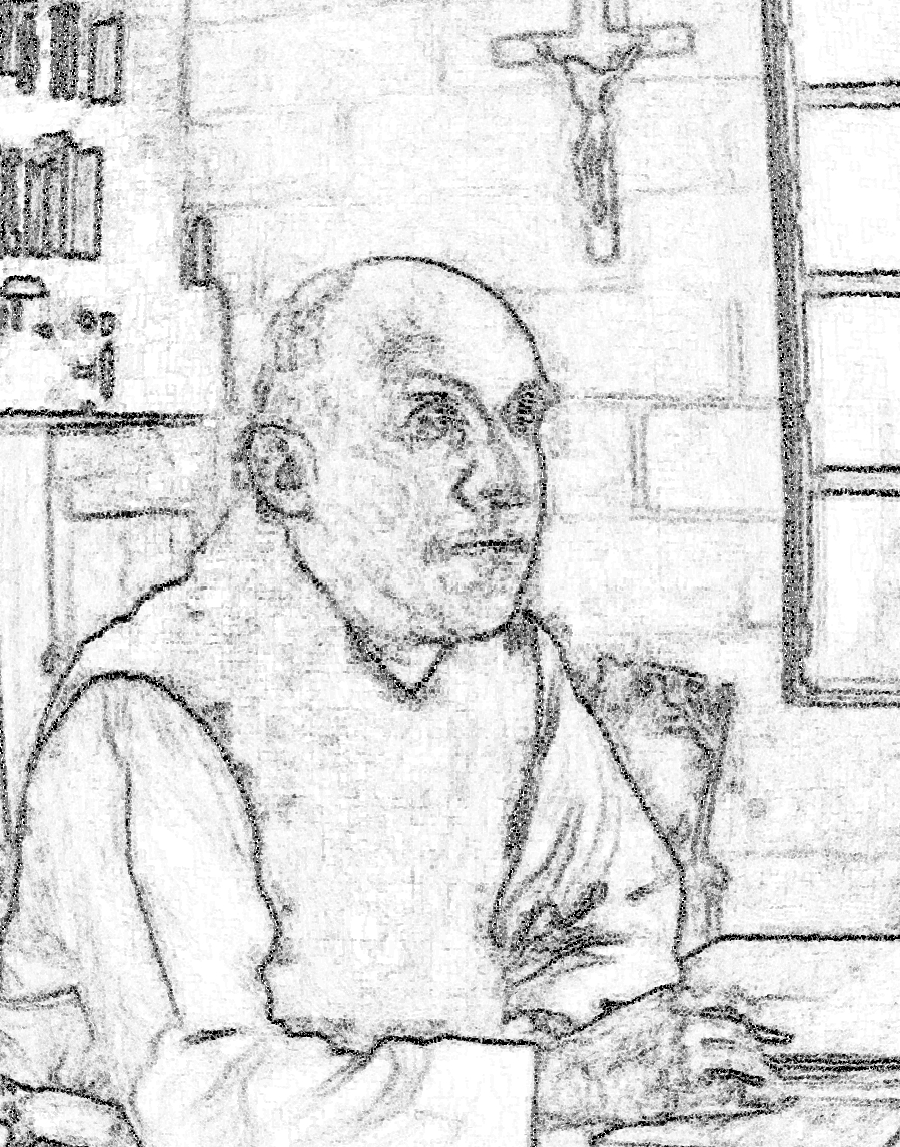
I understand that Thomas Merton (1915-1968) is a somewhat controversial figure in some Catholic circles. His book, The Seven Storey Mountain, which came out in 1948, is an autobiography that tells the story of his conversion from atheism to Catholicism and then his journey to becoming a Trappist monk.
This book made me, and thousands of others, want to become monks. Fulton Sheen described it as “a contemporary version of Saint Augustine’s Confessions.” Merton had what I would consider a completely orthodox, heartfelt, and sincere conversion to the Catholic faith.
He wanted to become a Carthusian to have complete solitude and silence but had to “settle” for the Cistercians (Trappists) at Gethsemane in Kentucky because of the Nazi occupation of France. He was also “forced” by his Abbot to exercise his writing talents when all he wanted to do was live a contemplative life.
Thomas Merton’s New Seeds of Contemplation is, I believe, a brilliant and inspired work. It was written in 1962 and expands on his 1949 Seeds of Contemplation. Merton was a man who was passionate about contemplation – which he saw an embracing of the direct experiential awareness of God’s presence. He highlighted that the soul was meant to be “fully awake, fully active, fully aware that it is alive.”
Beliefs and experiences
Even more inspired, in my opinion, was his lesser known work The Inner Experience: Notes on Contemplation. I will be citing primarily from this work in this article because of its relevance to a parts psychology perspective.
I cannot say much about Thomas Merton’s foray into eastern religions but he is certainly not, according to the Church, a heretic. He visited the East. He wrote about his experience. He exhibited an uncommon appreciation for what he learned, although not perhaps uncommon in the 1960s.
He opposed the Vietnam War, which was perhaps seen as radical then, but I think less so now. He was a pacifist. Was he too accommodating? Perhaps. Syncretistic? Hmmm. I wouldn’t necessarily go that far.
I have not read his later books (The Way of Chuang Tzu in 1965, Mystics and Zen Masters in 1967, Zen and the Birds of Appetite in 1968), and he may have overemphasized the ways Zen Buddhism and Catholicism were different paths to the divine. He belonged to (at that time) a strict contemplative order and challenged the rigidity he experienced there and in the Church.
Nevertheless, his secretary Brother Patrick Hart confirmed that he said Mass daily and died a faithful orthodox Catholic priest. Thomas Merton has never been denounced as a heretic by the Catholic Church and in fact Pope Francis has praised him as a spiritual guide in 2015. Bishop Robert Barron described him as a “master of spirituality” and a “great theologian.”
Exploring uncharted territory
In my own view, Merton explored uncharted territory, and he did it with honesty and respect. I do see a great deal of goodness in many eastern religions and the magisterial teaching of the Second Vatican Council affirmed this truth (Nostra Aetate – rays of truth, English title “Declaration of the Church to Non-Christian Religions). Nevertheless, Vatican II affirms that Christ is the fullness of truth and religious life.
In my view the main point of contention between most eastern religions and Christianity is that eastern religions lack a personal relationship with God, and they lack a satisfying understanding of the meaning of suffering.
I remain a Christian because God loves me, personally. He cares about me, redeems me, and wants an agape-infused eros relationship with me. When I die, my individuality is valued, and I do not simply merge with the universe.
Also, there is a sanctifying value in suffering. This is a difficult teaching but the shocking message on the Cross is that our suffering matters to God and that it has significance. I would have to ask a Merton scholar to understand whether Thomas Merton appreciated my distinctions. I’m willing to give him the benefit of the doubt and think that he did.
The “false self”
One major “bone of contention” that I have with Merton, from a parts psychology perspective, is his emphasis on the false self. He saw the false self as an egocentric persona that must be stripped away to find one’s true identity in God. Interestingly, Pope John Paul II and Pope Benedict XVI referred to the “false self” in many of their addresses. I react against this “false self” vs. “true self” dichotomy.
Pope Saint John Paul II often cited the Second Vatican Council’s Gaudium et Spes “Man cannot fully find himself except through a sincere gift of himself.” The “false self “would be the state where a person treats himself or herself as an object. The ego, the external self, must be stripped away to become a gift to others.
I understand the point being made but I would argue that instead of a “false self” we’re actually dealing with a part who needs to let go of the burden of some form of self-protection to be free and able to choose to love others.
Alienating a protector
Demonizing a “false self” alienates a protective part. This potentially leads to the exiling of a part of the self-system. This part will still operate unconsciously and covertly and will at some point resurface. The parts work approach instead is to befriend that part, understand that part, unburden that part, and help that part to learn how to protect in healthier ways.
We can, in the tradition of Saint John of the Cross, “destroy” or at least release the false attachments of our parts or the ego. But we don’t want to destroy a part of the self-system. Instead, we want to redeem it, restore it, and liberate it from those false attachments. The parts approach is non-violent and compassionate while still being direct and intentional.
At the end of the day, I can hardly blame Thomas Merton or even Pope John Paul II and Benedict XVI for not having a subtle understanding of IFS or parts work psychology.
Positive aspects of Thomas Merton’s thought
Merton understood the inmost self as the “new man in Christ” which is mentioned in Ephesians 4:24 and Colossians 3:10. He focused on the interior life:
“The discovery of God as present to the inmost depths of our being, is in reality the shift from an exterior to an interior life in the strict sense of the word.” (Merton, p.89)
He saw the focus on the exterior life as detrimental to the psyche and he emphasized the need to live in the reality of the inmost self. He said it was important to bring all of our desires and strivings to the inner sanctuary to experience the grace of God.
This is a battle, like the wrestling of Jacob with God, and the exterior self is wounded, and we begin to rely on the interior self. He compares this wounding to John of the Cross’ painful and difficult but purifying “dark night of the sense” which is itself a prelude to the “dark night of the spirit” that leads to perfect union with God.
Merton described pure contemplation as contact with God in an apophatic way where all images and words and concepts are considered inadequate in describing God. Like all the Catholic mystics before him, Merton said that this experience of the knowledge of God in the Trinity was a pure gift of God and not a matter of human effort.
Perfection in love, which is only possible with grace, moves one to becoming more like God who is the source and giver of love. We can experience this in the “darkness of unknowing” which is not about intellectualism. He states:
If a medium there is, it is not intellectual, not an image or species in the mind, but a disposition of our whole being, brought about by that love which so likens and conforms us to God that we become able to experience Him mystically in and through our inmost selves, as if He were our very selves. The inner self of the mystic, elevated and transformed in Christ, united to the Father in the Son, through the Holy Spirit, now knows God not so much through the medium of an objective image as through its own divinized subjectivity. (Merton, p. 69)
He cites Saint Gregory of Nyssa and Dionysius the Areopagite and discusses how the soul ascends into darkness and leaves behind all senses and goes deeper. The soul is touched in a “mystical darkness” by the presence of God.
This divine darkness is good, but it requires faith to enter into. It is a movement into the unknown. Some describe it paradoxically as a “luminous darkness.” This is a powerful transcendental moment of ecstasy. Here the soul is embraced by divine love, and this is what is called infused contemplation.
Experience of God
Thomas Merton provides specific characteristics of this experience: a transcendence of the senses, a quality of light in darkness, an activity of love on both sides, an act of interior union, a supernatural love, and an experiential contact with God.
I personally love this focus on an experience of God. I believe this is what mystical theology is all about. It does not have to include visions, levitations, bilocation, etc. It is about an experience of God in the depths of the soul. And above all, it is an experience of the love of God.
Merton cites Saint Bernard of Clairvaux who sees love as sufficient in itself, or as its own reward. An experience of God’s love is the source of perfect joy. The soul is passive as it receives this love from God.
We may experience the light of God as painful as it shines on and purifies our soul. This divine light brings about a deeper experience of grace as the soul lets go of even early consolations. Merton describes a difficult period of spiritual purification when the life of prayer can actually be very difficult.
Merton cites Saint John of the Cross as explores this difficult process of detachment, even from the pleasures of meditation. Here the soul may experience a wounding. Merton cites some spiritual greats that I have only recently discovered such as the author of the Cloud of Unknowing and Blessed John Ruysbroeck, a Flemish mystic from the fifteenth century.
Merton introduces the Dominican mystic Meister Eckhart who speaks about the “spark” or “center” of the soul where one can contact God. He describes it as a “dynamic agent” and identifies this with the image/likeness of God and the inmost self.
Saint Bernard of Clairvaux also describes encountering God, the Word, in darkness and within the “inmost heart.” This experience is beyond words, beyond imagination and beyond metaphors. It is powerfully transformative. It is an experience, sometimes that appears suddenly, of the Living God. It is a discovery of infinite love.
This experience of radical transcendent transformation of the interior life by God Himself, by God alone is an experience of profound divine love. This is the experience I tried to convey in the song, Dearest Love, published by Pateras Agape and available on Spotify, Apple Music etc and also available with visible lyrics and animation (we did our best!) on YouTube.
The lyrics are based on the Song of Songs as well as the writings of Saint Paul, Saint Ambrose, and Saint Augustine. It is an attempt to capture the mystical journey. The beautiful first experience of God’s love, the sense of loss and wounding, the experience of entering the unknown darkness, the experience of new sight in the darkness, and then the new journey walking in the light and in the deeper experience of God’s enduring love. I hope you enjoy!
Exploring on your own
I really have only touched on the teachings of Thomas Merton and the contemplative life. I think his understanding of the false vs true self is flawed from a parts work perspective. But his teaching on the contemplative life can be quite valuable, drawing on so many of the great mystical saints in the Catholic tradition, and they have a lot to offer as we explore the role of the inmost self.
I would probably avoid his later writings on the relationship of Christianity and Buddhism, but to be honest, I have not spent any time analyzing them. If you stick with Seven Storey Mountain, New Seeds of Contemplation, No Man is an Island, Thoughts in Solitude, and The Inner Experience, I think you will do well.
May God bless you on your journey this week!
Resources:
Merton, Thomas; Shannon, William H. The Inner Experience: Notes on Contemplation. (Function). Kindle Edition.
Bishop Barron defends and explains Thomas Merton in this fascinating, 10-minute video.
Thomas Merton speaks for himself in this hour-long collection of audio clips: Merton In His Own Voice
Dr. Gerry Crete
Dr. Gerry Crete, Ph.D., LPC, LMFT
Dr. Gerry Crete is the founder and practice director of Transfiguration Counseling and Coaching and author of Litanies of the Heart: Relieving Post-traumatic Stress and Calming Anxiety Through Healing Our Parts, published by Sophia Institute Press. A therapist with expertise in trauma and anxiety disorders, Dr. Crete is trained in Internal Family Systems (IFS), Ego State Therapy, and Clinical Hypnosis. He is also an EMDR certified therapist and consultant. Dr. Crete works with individuals, couples, and families, including seminarians, priests, and religious, and teaches at Saint Vincent’s Seminary in Latrobe, PA.
Stay informed about the latest research in psychology.
%20%5BRecovered%5D-09.webp)
%20%5BRecovered%5D-10.webp)