December 15, 2025
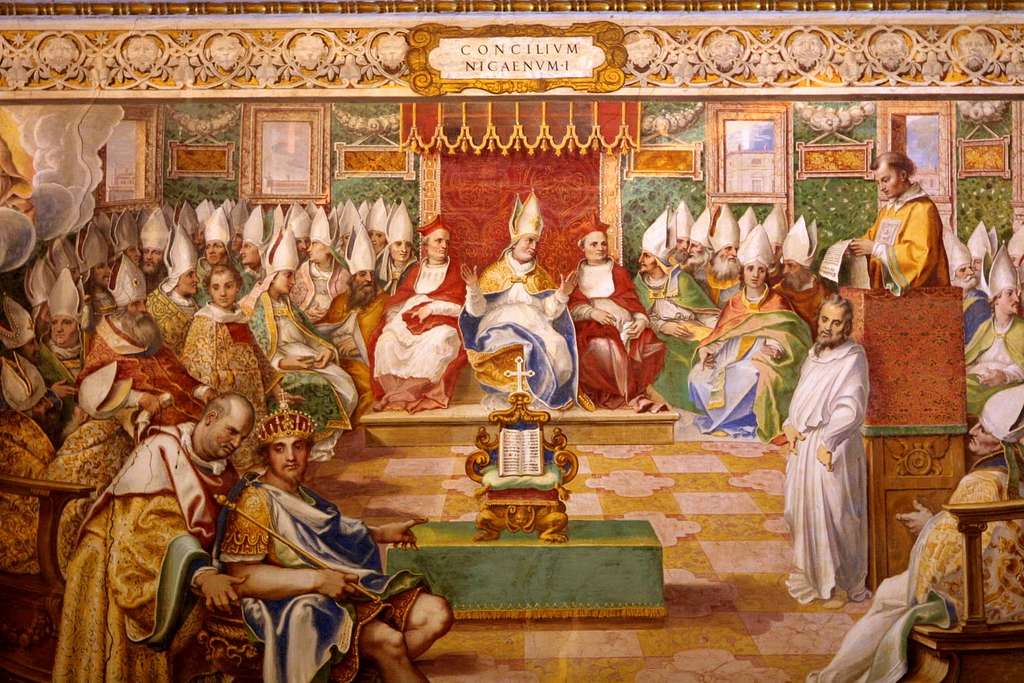
We are celebrating the 1700th anniversary of the Council of Nicaea! This is the Ecumenical Council that was called by the Emperor Constantine and brought together bishops around the world in 325 A.D. to confirm that Jesus Christ is the Son of God and that He is consubstantial (of the same substance) with the Father.
Pope Leo’s recent Apostolic Letter “In the Unity of the Faith” provides a nice summary of the history and the theology of the Council and its importance for Church unity and even its applicability to our lives today.
I’d like to focus on two topics relevant to a Christian parts work approach that Pope Leo highlights in his letter: 1) The question of divinization, and 2) Unity within diversity.
The question of divinization
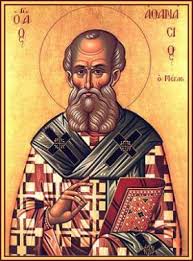
Pope Leo cites St. Athanasius (who attended the Council as a deacon and then later becomes Bishop of Alexandria) who says in Contra Arianos, that Jesus “made us children of the Father and deified mankind by becoming himself man. Therefore, he was not man, and then became God; but he was God, and then became man, and that to deify us.”
The Council of Chalcedon later affirms that Jesus had both a divine and a human nature. He wasn’t just a God who borrowed some human flesh to walk around in nor was He a man who ascended to divinity. He is God, the Second Person of the Trinity, who became man. As Athanasius states above, He became man to raise up fallen humanity, to deify humanity.
This topic of deification is important for a Christian approach to parts work because it speaks to the end of the process, the goal, or the telos of our human formation work.
We don’t identify, un-blend, and unburden our parts simply because we enjoy self-reflection and interior work for its own sake. Yes, we want to heal old wounds. We want to rediscover exiled parts of our system and meet their healthy needs and free them from their enslavement to the lies and false beliefs of the past. We want to unburden our protector parts from their extreme roles. We want to free our firefighter parts from their compulsive tendencies.
In addition to all this healing and growth, we want to bring all our parts into harmony with each other and with your inmost self. We want to access our inmost self so that we are truly led by our spiritual center. When our inmost self, in perfect harmony with all our inner parts, unites with God through Jesus Christ and in the love of the Holy Spirit, we are truly transformed.
In this transformation, whether you call it theosis, or deification, or partaking of the divine nature, we become fully the human being God always intended. As Pope Leo beautifully puts it, “divinization … is true humanization.”
As we work with our inner system in this process, we must be very mindful that we do not imagine that we can divinize ourselves. IFS (or other trauma-informed, somatic and/or parts work approaches) is a tool to help us in our human formation. It can help us on the natural or psychological level overcome a host of personal and interpersonal issues by accessing and working with our inner world in a more intentional and focused way.
When approached from a Christian lens, it can also help us discover and more fully access the deepest core of our humanity, the inmost self, the cave of the heart, and facilitate greater levels of compassion, creativity, and wisdom, among other qualities and virtues, to flow and enrich our lives.
In this way, and using the humanist psychologist Abraham Maslow’s secular language, we can become more “self-actualized” as we achieve higher levels of human potential.
This is all well and good, but a truly Christian approach embraces the reality that we cannot achieve divinization through our own efforts. We cannot become “one spirit with him” (1 Corinthians 6:17) or “united with him” (Romans 6: 5) or “one in Christ Jesus” (Galatians 3: 28) without His grace. If we become “partakers in the divine nature” (2 Peter 1:4) it is because He has lifted us up to this stature. Unlike our first human parents, we do not strive to become like God apart from God. Instead, we become like God through full cooperation and union with Him in response to His great love for us.
Unity within diversity
The second theme of Pope Leo’s Apostolic Letter is the question of unity within diversity. The Council of Nicaea was called to bring unity in a Church that was divided by Arianism. The Nicene Creed emerged from this Council (and the Council of Constantinople) to become a source of unity for all Christians.
Pope Leo states, “It [the Creed] offers us a model of true unity in legitimate diversity. Unity in the Trinity, Trinity in Unity, because unity without multiplicity is tyranny, multiplicity without unity is fragmentation.” This is truth for the universal Church, and it is truth for the interior life.
If we deny the multiplicity of our interior world, we allow one part of our system to dominate. If we fail to recognize the beauty and richness of our many parts, we become superficial, one-dimensional, and limited. Conversely, if we acknowledge our many parts but have no access to the inmost self, and we have no self-leadership, then our interior world will feel fragmented and chaotic.
Our own internal unity is only perfectly achieved when our desires are reoriented to their natural (i.e. pre-fallen) state which is a desire for union with God. This perfection occurs when we no longer turn to the sensible world as an object that will meet our needs in and of itself. Instead, we “see” the sensible world through spiritual eyes.
Two kinds of eyes
There is a long tradition in the Church, beginning with Origen of Alexandria, of describing man as having two kinds of eyes, one of the flesh, and one spiritual. When Adam and Eve’s eyes were “closed” this was the loss of their spiritual eyes. They lost ready access to the inmost self.
St. Symeon the New Theologian states that Adam and Eve “began to see with the eyes of the body, the eyes of the soul being blinded, fallen from imperishable life.” In this state we forget God and we turn to the world for security and so we become anxious and preoccupied. We forget the true nature of things and fail to grasp the fundamental unity in both the universe and in our souls. We become fragmented within with competing worries and ruminations. We become distracted and agitated. We are separated from God and from our inmost self.
God created us for union with Him and deep within our heart, in our inmost self, no matter how far we turn away from God, we still yearn for Him. The highest joy we can experience is the delight of intimacy with Him. St. Symeon says, “Christ, our God, is the goal of all desire.”
Commenting on the Lord’s Prayer, St. Maximus the Confessor exclaims, “There is only one happiness: the common life of the soul with the Word.” It is then against our nature to turn away from God and seek comfort in the sensible world apart from Him. Unhealthy self-love is the opposite of love because it is focused only on using others and things for self-pleasure alone.
As we appreciate our own inner multiplicity in unity with our inmost self, and as we open our hearts to the deifying work of Christ, we reclaim our true desire, which is for union with the Holy Trinity, the very God who is Love.
Let us rejoice in the richness of our interior world as we pray with Pope Leo XIX, “Come, divine Comforter, source of harmony, unite the hearts and minds of believers. Come and grant us to taste the beauty of communion.”
St. Athanasius, pray for us!
May God bless you on your journey this week!
Resources:
Pope Leo XIV’s Apostolic Letter In Unitate Fidei (“In the Unity of the Faith”)
Joint Declaration by Pope Leo XIV and the Eastern Orthodox Ecumenical Patriarch of Constantinople, which is another movement toward unity within diversity in the Church.
Christ is Among us!
Dr. Gerry Crete
Dr. Gerry Crete, Ph.D., LPC, LMFT
Dr. Gerry Crete is the founder and practice director of Transfiguration Counseling and Coaching and author of Litanies of the Heart: Relieving Post-traumatic Stress and Calming Anxiety Through Healing Our Parts, published by Sophia Institute Press. A therapist with expertise in trauma and anxiety disorders, Dr. Crete is trained in Internal Family Systems (IFS), Ego State Therapy, and Clinical Hypnosis. He is also an EMDR certified therapist and consultant. Dr. Crete works with individuals, couples, and families, including seminarians, priests, and religious, and teaches at Saint Vincent’s Seminary in Latrobe, PA.
Stay informed about the latest research in psychology.
%20%5BRecovered%5D-09.webp)
%20%5BRecovered%5D-10.webp)