December 1, 2025
Warning: This article contains disturbing information about sexual abuse, spiritual abuse, and Church cover-ups by ecclesial leadership. In the resource section below please find information about support groups for survivors of abuse.
Marcial Maciel: The Wolf of God is a four-part HBO Max Original docuseries released August 14, 2025, documenting the activities of Marcial Maciel Degollado (1920-2008) who was a priest and founder of the Legionaries of Christ (LC, sometimes referred to as “the Legion”). He was General Director of the Legionaries of Christ and the Regnum Christi (RC) movement from 1941-2005.
Regnum Christi is the lay movement associated with the Legionaries of Christ made up of lay people and consecrated men and women. Maciel was recognized as a skilled fundraiser and prolific recruiter of new seminarians. This documentary recounts how Maciel built a network of power and influence in the Catholic Church, sexually abused children and seminarians, struggled with a morphine addiction, embezzled funds, and fathered at least three (maybe as many as six) illegitimate children.
This Spanish language series was produced in Mexico by Anima Films, directed by Matias Gueiburt, and produced by Sebastian Gamba, Julian Rousso, Matias Gueilburt, Mariano Cesar, and Sergio Nakasone.
Parts work and understanding abuse in the Church
This television documentary series is of interest to Catholics as it speaks to the issues of both sexual abuse and spiritual abuse in the Church. We need very much to reflect on the past to move forward with greater awareness, repentance, dignity, and purpose.
If we are serious about building the Kingdom of God then we need to be open, both individually and collectively, to continual sanctification. We need to examine the abuse perpetrated by Maciel, and others such as Theodore McCarrick, as well as the people and structures in the Church that supported their rise to power and facilitated their abuse of children and vulnerable adults. We need to make sure that these atrocities never happen again.
A parts work perspective may help us understand better how individuals become disconnected from their inmost self and how parts emerge that are truly dangerous, self-destructive and devastatingly harmful to others. Parts work may also help us understand how human systems can allow these kinds of crimes to be kept hidden and fester.
Legionaries’ response to the docuseries
To their credit, the Legionaries of Christ (LC) congregation did not oppose the making of this docuseries. They released a statement after the airing of the docuseries claiming solidarity with the victims and “recognition for their courage in reporting these incidents and making possible the process of conversion and renewal that we continue to undertake.”
The Legion did express regret that images of various individuals (children, former consecrated and former priests) were used without permission. In the series, faces of minors were either blurred or had black bars over their eyes.
Father John Connor, the current General Director of the Legion, said in a letter published online on September 16, 2025, that watching the docuseries was a “cathartic experience… that challenges us to face our history again.” He expressed appreciation for the producers and acknowledged the courage of the victims. He recognized the pain caused by the founder and the need to listen to the victims. The only current Legionnaire to appear in the series was Father Andreas Schöggl, former secretary general and current archivist.
Although this represents a major change in attitude by the Legion, my own thought is that more than listening needs to be done. Maciel’s victims were literally vilified by both LC leadership, LC priests, and RC members for decades and their lives were ruined. I am curious about how this has been or has not been addressed.
Former members still complain that their pain was often due to the inaction of their superiors when issues were raised. They also complain about the way the founder continued to be acknowledged long after the accusations were obviously true and how truth sayers were treated. The problem was not just the person of Maciel but a whole system that was, to varying degrees, complicit. There were no high-level LC resignations, and no one was truly held accountable for criminal behavior.
It should also be noted that according to an LC report, 175 minors (aged 11-16 years old) were victims of sexual abuse by 33 priests in multiple countries between the years of 1941-2019. One third of the priestly abusers were themselves abused by Marcial Maciel. This number does not include seminarians who were abused and left the order before ordination. Between 2019-2024 twenty additional complaints of inappropriate sexual behavior (over the decades) have been lodged. This is evidence of a multi-generational pattern of abuse and that the damage inflicted by Maciel continues to cause harm.
When the Legion released these statistics in 2019, Pope Francis also accepted the resignation of 92-year-old Cardinal Angelo Sodano, the Dean of the College of Cardinals, who had been one of the biggest defenders of the Legion. Sodano had been the secretary of state under Pope John Paul II, and he had blocked any investigation of Maciel (until just before Benedict XVI became Pope) even though there was documented evidence of Maciel’s drug addiction and pedophilia as early as the 1940’s. Sodano has a history of ignoring accusations and defending and protecting many abusers including the now deceased infamous former cardinal and ex-priest Theodore McCarrick.
Safe environment initiatives have been enacted in the Legion and a Commission of Study on abuse of authority will present results to the LC General Chapter in 2026.
Good work and intentions of the current members
I want to be clear up front: this article is not at all meant to be a hit piece against the current Legionaries of Christ. Historically and n general, the Church does not have a good track record of handling situations of abuse by clergy. The fact that Maciel was able to do the things he did is a black mark against the institutional Church as a whole.
There have been important monumental changes made in the Church to protect children. But to my mind, not enough has been done to truly support victims, acknowledge the pain caused, and make reparations. The primary way the Church has been moved to do the right thing in these cases has been due to legal action against her. This is not the moral high ground, far from it.
Nevertheless, the Legion is currently a religious congregation in good standing with the Roman Catholic Church. Many of its lay members (Regnum Christi) and clergy participated in and joined their community in good faith. Most were unaware of the atrocities perpetrated by the founder. It is not mentioned in the docuseries, but in 2010 the Legion was put under the care of Cardinal Velasio De Paolis and underwent a rewriting of their constitutions. I want to take a moment to acknowledge the good work and good intentions of so many Legionaries and Regnum Christi (RC) members around the world.
Having said that, this docuseries reminded me that so much has not been done to account for the sins of the past, repair the damage, and build a new future with integrity. This is true in the story of the Legion and Maciel, but it is also true in general, especially considering the sexual abuse crisis, in the Church at large.
Personal perspective
In 1998 my wife and three small children moved to Atlanta, GA from Ottawa, Ontario, Canada. We were new to the country and new to the culture. We were interested in finding a church home, but it was a challenge in North Atlanta suburbia where the Catholic churches were crowded and to us often seemed impersonal. I was used to a more charismatic and evangelical form of Catholicism.
I was invited to a Regnum Christi event by some men I met at my parish. I had never heard of the Legion or Regnum Christi before and they seemed energetic, “on fire” even, and orthodox. Later, I enrolled my kids in the local Legionary school where I also took a job as a teacher and then as their first school counselor.
I remember noting that leadership and some teachers at the school seemed unusually smitten with the founder of the order, Marcial Maciel, but I dismissed it as odd religious fervor.
In 2002 or 2003 a televised news story (I cannot recall which one and cannot find it online) aired in the United States exposing Maciel for many misdeeds. I hadn’t seen it, but the staff and faculty were assembled and leadership assured us that it was all a bunch of lies by enemies of the Church and that there was “no chance” that Maciel was guilty of sexual abuse or any of the accusations.
My inner alarm bells went off. How can anyone say of another that there was no chance that abuse happened. I knew from my own experience that unless you were there in the room, you cannot know. This led me to investigate. I learned things I didn’t know about Regnum Christi and their rules. I didn’t know for example that they had secret levels of membership.
I later learned that in 1997 eight ex-Legionaries came forward and accused Maciel of pederasty, abusing them when they were teens. The eight men included Felix Alarcon, Jese Antonio Perez Olvera, Fernando Perez Olvera, Juan Jose Vaca, Saul Barrales, Alejandro Espionoas, Arturo Jurado, and Jose Barba. I ended up communicating with some of the victims and even met with a different victim (not named) in person. I became convinced that these men were telling the truth. When I raised my concerns at the school, my concerns were dismissed. “It wasn’t possible… it’s all lies,” they said. “Hmmm,” I thought. “You can’t know that.”
In May of 2004 I left my job and pulled my kids out of the only nearby Catholic school. I waited almost a year but finally decided to leave my RC men’s group. Only one of the men in my group stayed in contact with me. I lost my job, Catholic education for my children, and a group of male friends.
I watched for years to see how this would unfold. I knew that a group of survivors had appealed to the Vatican, but it seemed like nothing was being done. I was convinced that once the truth came out, the Church would suppress this order. Pope Benedict XVI was elected in April 2005, and Maciel was removed from his position in 2006.
Truth revealed
The undeniable truth finally came out in 2009 after his death, and it was more extensive than I realized. Not only was Maciel a pedophile but he had two secret families, a major drug addiction, and charges of financial misdeeds.
Pope Benedict XVI initiated an apostolic visitation by five bishops (including Archbishop Charles Chaput of Denver) from five different countries. Their 2010 report concluded that the congregation needed a “profound re-evaluation” and that Maciel was “devoid of scruples and authentic religious meaning.” Maciel was described as having committed “serious and objectively immoral acts… true crimes and manifest a life without scruples or authentic religious sentiment.” The report also stated that the congregation had created a “mechanism of defense” that shielded him from accusations and that this made him “untouchable.”
Finally, Maciel was denounced as an immoral fraud, and the entire system that worked to protect him was exposed.
Instead of disbanding the congregation, the Vatican assigned Cardinal Velasio De Paolis to begin a reformation process. It took me a long time to accept this decision. I wanted to see justice done and this seemed like a very weak response. Perhaps in the Church’s wisdom it was important to respect the dignity of the persons who had given their lives to this order in good faith. Still, it was hard to process at the time. Why would anyone want to stay in or join an order founded by a devil?
Once I entered private practice as a Catholic counselor with a good understanding of the LC and the RC, I ended up working with current and former members to process their grief, their pain, their trauma, and their disillusionment with the revelations about Maciel and their issues with the order itself. I felt honored to be able to help in this healing process. For me, it didn’t matter if they stayed in the congregation or if they left, I wanted to help. Perhaps this work also helped in my own healing process.
Technical critique of the docuseries
I want to say a few things about the series itself from a more technical point of view. It was in Spanish (I speak French but not Spanish) and so I had to read the subtitles. People in Spanish speak quickly and it is very difficult to keep up with the subtitles. So, I spent a great deal of time pausing, rewinding, and re-reading. I found it hard to watch at first because the narrative moves so quickly. In many cases I wanted them to provide more evidence or cite sources or provide more clarity.
The storytelling was sometimes frustratingly vague and nonspecific. – not the kind of journalism I have come to expect. They use euphemisms more often than I am used to. They weren’t always clear about who was speaking and their roles (eventually this becomes clear but not at first, so this was frustrating). I had to use Google translate to make sure I understood whether the speaker was a former LC, a current LC, a journalist, or a psychologist. They moved too quickly through important factual details and then they slowed down (painfully at times) for dramatized emotional moments.
The footage they accumulated was impressive. I had never seen so many early pictures of Maciel and the congregation, the various bishops who supported him (and the ones that changed their minds), and the young innocents who joined. I gained a good understanding of the growth of the congregation and the physical geography and the places they inhabited.
Episode 1: Maciel’s own abuse history
Honestly, I wanted to vomit seeing Maciel kissing Pope John Paul II.
The story of this man recruiting boys into a makeshift Church community in Mexico, offering them access to pools, and basketball courts, and life in a mansion, reminded me of Michael Jackson and Neverland. This was hard to watch.
I add these images of Maciel with these young unprotected boys to my memory of this man being revered for so long in Legionary schools, in a school my own children attended for a time; it is hard to process.
This series highlights something profound, Maciel’s own experience of abuse and his multiple identities — taking us into the world of parts psychology.
Maciel’s father was described as a “macho rancher.” Without providing too many specifics they strongly imply that Maciel and his friend at a young age were abused by mule drivers on his father’s property [another anecdotal account not mentioned in this docuseries says Maciel was abused by one of his uncle bishops].
Maciel apparently was afraid that if his father found out, that he would be accused of “working them up” and that his “father would kill me.” This is disturbing on many levels. If Maciel was sexually abused by men who worked for his father, why would he think that his father would not defend him? Why did he think his father would blame him and want to kill him?
This speaks to shame. The lie: If you are a boy or man abused by another man, then you are less of a boy or man. Men who are sexually abused almost always blame themselves. If this is true, then I can have some measure of sympathy for Maciel on this account. No child should be abused, and this seriously disrupts one’s sense of self and one’s sexual development.
We are told that to escape this environment Maciel appealed to three different uncles, all of whom were bishops. Maciel claims to have received a vision from the Holy Spirit to start a congregation of priests. The first uncle bishop accepted him but later rejected him because he was seen as “stealing” men to his “congregation” (as yet not formed, as Maciel was not even a priest). Maciel was seen as “contaminating” others.
Maciel then goes to a second bishop uncle but is expelled again, this time, according to the series, for being found in bed with one of the other seminarians. Maciel is sent away in the middle of the night.
Maciel is expelled from two seminaries before the age of 20.
Finally, he appeals to a third uncle bishop who gives him free reign, and he does a kind of private “home study” toward priesthood. We learn that Maciel may have never had more than a third-grade formal education.
Letters were sent by the two previous seminaries to other seminaries not to let Maciel in.
Nevertheless, before the age of 21 Maciel is recruiting boys into his “congregation,” with the support of his uncle Bishop Francisco Gonzalez Arias. He promises them a pool, a soccer field, and basketball courts. We hear from Juan Jose Vaca who is recruited at the age of 10 to go with Maciel to Mexico City. Maciel recruits 9, 10, 11, 12-year-old boys and takes them away from their families. He creates an image of himself as a saint and seduces high profile wealthy people, especially widows, to be donors. In 1944 he is ordained a priest which gives him official authority.
Maciel starts a new company, Fuentes Brotantes, and starts collecting properties using donor funds. He convinces a very wealthy man to pretend to offer him a huge donation which tricks others to donate. He then buys a mansion/villa that gives him credibility. He attracts boys with a bowling alley and stables and a pool. In 1948 10-year-old Jose Barba arrives at the villa.
Maciel follows a Jesuit program and makes a connection with the Jesuit University de Camillas in Spain to send seminarians there. He allies with the pro-Franco Secretary of Foreign Affairs of Spain to pay for travel for boys to Spain. Maciel starts “stealing” vocations from the Jesuit university and they are eventually evicted.
We hear about the chilling tale of Vaca and how he was a favorite of Maciel and how the sexual abuse began. Vaca describes how he is proud to belong to this group and how, so far from home, Maciel becomes both father and mother to him. Maciel gains total control over seminarians in Europe and the abuse escalates.
Maciel gets the Bishop of Cuernavaca in Spain to support him and bribes postal workers to delay the arrival of a Vatican imperative to suspend the installation of the congregation, so that it arrives too late, and the congregation is installed.
Episode 2: Abuse, addiction, and bribery
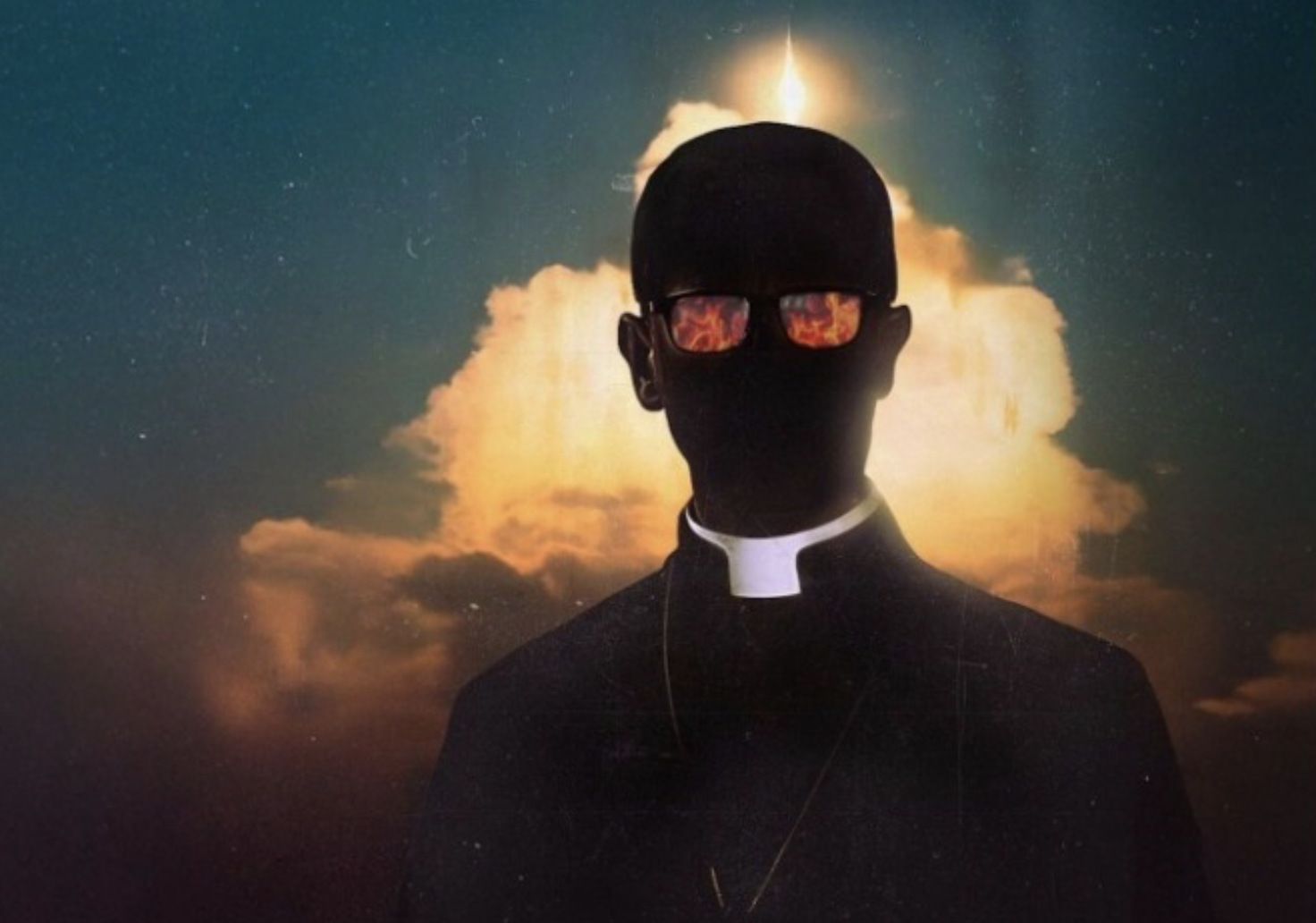
The program poses this disturbing question proposed by Vaca: “where does mental illness end and evil begin.”
We learn about how Maciel seduces boys and we hear about how Vaca was manipulated and tormented by what was going on with Maciel. We also learn how Maciel curries favors with Vatican leaders with money and gifts. Maciel becomes “untouchable.”
Maciel builds an “empire” in Rome, buys properties in Europe, and visits Mexico, which is experiencing a period of growth, and using his newfound prestige builds a stronger presence there. Maciel ingratiates himself to Flora Garza the widow of a very wealthy Mexican man and uses her for her money then discards her.
We learn about how Maciel sexually seduces Barba in 1955 and we learn about Maciel’s addiction to morphine. Children are sent to various pharmacies to get medication for Maciel. We also learn about the establishment of the “4th vow” where you are not allowed to criticize a superior and that you must report anyone who criticizes a superior.
At one point, Maciel is taken to a hospital to detox. This leads to a Vatican investigation into Maciel, and all the boys lie and say Maciel is a saint. The investigator sees through this and describes in his report “devious deceit,” “sodomy,” and “drug use.” The Vatican concludes that Maciel should be removed and not allowed near children.
Maciel leaves Rome and is hidden in a gynecology hospital by Cardinal Pizzada. Maciel goes to Africa with Vaca to get meds. Maciel overdoses and almost dies in a tub but Vaca saves his life. Maciel is taken to a hospital again to detox.
In 1958 Pope Pius XII dies and before the election of Pope John XXIII Maciel manages to get reinstated when Cardinal Clemente Micara signs his reinstatement! Apparently, this is opposed to canon law which prohibits major decisions such as this to be made when there is no Pope. However, we learn that Maciel gets around this by giving Micara $10,000 which is a large sum of money at that time.
Meanwhile Vaca, whose young conscience was disturbed, starts documenting the abuses in a journal, but his notes disappear from his room and Maciel calls him in, reprimands him, and sends him back to Spain to serve while withholding his ordination.
Episode 3: Possible psychological explanations
Here we learn how the Legion ingratiated itself with Pope John Paul II who supported them in their missionary zeal. Did John Paul turn a blind eye? Did he know about the sexual abuse and the drug use? We cannot be certain.
Vaca, after 6 years in Spain, is finally ordained.
In 1959 Regnum Christi (RC) is born which now for the first time includes women. We learn about the story of Elana Sada who becomes a leader of the RC movement. We also learn about the underhanded ways the LC use to get to know and influence potential wealthy donors.
Meanwhile Maciel helps organize John Paul II’s visits to Mexico. His relationship with John Paul II gives him power. He also starts creating companies that are tax havens in Panama.
We also find out that Maciel begins his double life.
He poses as a CIA agent, a U.S. technology executive, and a schoolteacher in Tijuana. He changes his clothes to adopt different personae.
It is at this point that I’m starting to wonder if Maciel has DID (dissociative identity disorder) or if he’s “merely” a sociopath. If he was indeed abused as a child, DID would be a way to make sense of his multiple personalities. He does appear to have distinct identities with different behaviors and histories. We don’t know if he was unaware (or dissociated during his experiences) of his different identities. His use of drugs makes it even more difficult to “diagnose” him with DID since drug use may also explain his disturbing behavior.
If Maciel was a sociopath (antisocial personality disorder) then this would make sense of his apparent complete lack of empathy for his victims, his extensive deceitfulness and manipulation, his reckless behavior, and his superficial and charismatic charm used to manipulate others for personal gain.
As the story continues, Maciel meets a 19-year-old girl in Tijuana, he’s 56, and he tells her he’s a widower and he wants to start a family. He adopts her son Omar, and they have two children together. We learn later that Maciel sexually abuses both boys.
Meanwhile, Vaca is put in charge in the U.S. as the Legion and RC grow there. After a while Vaca could no longer in good conscience take money from well-intentioned American donors to give to Maciel’s evil endeavors, so he resigns.
Maciel offers him the role of Director General of the entire congregation but when Vaca refuses, Maciel, in a veiled manner, threatens his life. Vaca writes a letter, with 6 copies to go to various church officials, in the event of his untimely death, exposing Maciel. Vaca appeals to Maciel to correct his behavior.
Maciel’s victims start communicating with each other. Gerald Renner of the Harford Courant wants to do a piece on Maciel, and he teams up with Jason Berry. At this point Maciel is literally a celebrity in Mexico. Maciel refuses to be interviewed by them. The Legion has its lawyers try to squash the story, but this does not work. In Mexico in 1997 the news hits that Maciel is accused of being a pedophile.
Episode 4: Truth comes out
Channel 40 in Mexico, CNI, does a documentary interviewing Maciel’s stepson Omar and his son Raul. They express their surprise in learning that their father is the leader of a major international Catholic religious order.
They later reveal that their father sexually abused them. The National Catholic Reporter also does a story about the scandal – but no other American news sources, including conservative Catholic ones, are interested. Maciel, the master “gaslighter,” sends a letter to them saying he’s praying for the people making these “false” accusations. He still refuses to be interviewed.
None of these news pieces gets national attention in the United States.
The Legion publishes a website “LegionaryFacts.org” attacking the survivors.
Vaca, who has left the Legion, loses his job at a college and is accused of being a liar.
Elana realizes she is being used and leaves the Legion/Regnum Christi. She was already having doubts but when the medical condition of her father (a brain embolism) is kept from her, for the sake of her work in the movement, she realizes she is being exploited.
In 2001 journalist Jason Berry gets a call from the Boston Globe that they are doing a big piece on abuse in the Catholic Church and in 2002 that scandal breaks.
Pope John Paul II says there’s no room for those who abuse the young in the Church. But he also says we must forgive. What is his position?
In 2004 the Legion celebrates its 60th anniversary with Pope John Paul II who is barely vocal and trotted out and propped up to support them. Cardinal Ratzinger refuses to attend.
Vaca meets with Cardinal Scicluna, who is investigating Maciel, when the Cardinal gets a call that Pope John Paul II has died. He tells Vaca that this won’t stop the investigation.
In 2005 Benedict becomes Pope and he has Cardinal Sodano, the Vatican Secretary of State, replaced with Cardinal Bertone, and has Maciel removed from the Legion leadership to a “reserved life of prayer and penance.”
Meanwhile Maciel buys a $1.8M property in Florida to live at and travels around the world in style, allegedly abusing children in Thailand (according to the series) and staying in 5-star hotels.
The Church still has not made mention of victims or removed Maciel from the priesthood.
In 2008 Maciel is in Florida dying of pancreatic cancer in the company of LC priests who say they are giving him communion daily. He refuses to repent and apparently, he refuses to confess and receive absolution.
The Legion leadership apparently thinks that Maciel is possessed by the devil and calls in an exorcist. He dies in January. Vaca calls him “an apostate and an atheist.” Barba says he “mocked the Church, the society, and couldn’t care less.” People still came in droves to his funeral and continue to venerate him. LC leadership say he ascended to heaven.
When the news came out about Norma, and her daughter Normita with Maciel, (his Spanish “wife” and child), this apparently provoked more outrage among the LC/RC than the sex abuse accusations.
Some tried to explain this away that someone sneaked into his bed at night to steal his sperm. Some tried to compare him to Saint Augustine who had a son (to be clear, Saint Augustine had a son prior to his conversion). There was a strong need among many in the LC/RC sphere to explain away or defend Maciel despite the mounting evidence of his undeniable misconduct. Norma, according to some sources, says that Maciel abused her as a child and impregnated her later.
It took a long while for the truth to sink in.
Maciel led a triple life.
Maciel molested over 60 minors.
Maciel invested in companies that were tied to the production of weapons (arms) and pornography.
The Legion stopped talking about their founder, removed the 4th vow, and took down his images in their schools and seminaries.
A view of Maciel’s life from a parts perspective
I assume the stories that Maciel was a sex abuse survivor himself are true. It sounds like he experienced horrific abuse by mule drivers when he was only 10 years old. He may also have been abused by one of his uncle priests. He reached out to relatives in the Church to escape his life on the ranch and join a seminary.
His vision of creating a legion of priests may have been genuine, I cannot say, but it could have been his psyche’s attempt to seek something good, something grand, something meaningful in the face of despair and shame.
Maciel is said to have multiple identities. He was a family man – twice over. He had a family in Mexico with a wife and a stepson and two biological children. He had a wife in Spain and a daughter.
Maciel posed as a CIA agent.
He posed as a teacher.
He was a ladies’ man.
He was a seducer of boys and men.
He was the leader of a religious congregation.
I propose, as I speculated before, that due to his trauma he had DID – dissociative identity disorder. This is not a free pass from all his sins. This is not an attempt to exonerate him, let alone canonize him. Far from it. I seek, however, to understand him.
His experience of trauma may have led him to compartmentalize aspects of his personality. He may have had manager parts that kept up a charade of religious leader, priest, and “saint.” He may also have had firefighter parts that numbed pain with drugs and sought an escape in sexual misbehavior.
All of these protective and maladapting parts would have been actively keeping his exile(s) far from conscious awareness. His exile was perhaps a 10-year-old part physically and sexually traumatized and fearful of his father’s reaction.
It is also possible https://www.regnumchristi.com/en/ that he had anti-social personality disorder which explains his lack of empathy, his manipulations, and his impulsive and reckless behavior. Again, this is a protective maladaptation to avoid experiencing the intense pain, shame, fear, and anger carried by his exile part(s). Sociopathy enabled him to stay disconnected from the dissonance of his double life.
He also appears to have struggled with a severe substance abuse disorder. We don’t know how he became addicted to morphine or the extent of his symptoms of physical pain. He used this alleged pain to seduce boys which is very disturbing. Perhaps the morphine facilitated his dissociation and disinhibition. We will never know for sure.
In understanding this man, this pedophile/pederast, this predator, this opportunist, this hedonist, I seek, with a level of caution, to understand each one of us. We all have parts that can be narcissistic, harmful, and self-destructive. We may not do the evil things Maciel has done, but we all struggle with sin. We all experience trauma. We all cope in negative ways. So even here I am cautious about casting stones. I want to be compassionate in the face of Maciel’s presumed abuse history and addictions.
I remain, however, disturbed by Maciel’s apparent lack of repentance. What does this mean? As I consider his case, I find it difficult to arrive at a conclusion. Was he simply mentally ill? Was he simply evil? Or some combination?
Maciel appears to have had no access to his inmost self. The Vatican investigators literally said his life was “devoid of scruples and authentic religious meaning.” His life appears to have been dictated by a series of burdened maladaptive manipulating parts. Lord have mercy. Lord have mercy. Lord have mercy.
Maciel had parts that were burdened and blended, no question. He had unresolved pain. He sought to relieve that pain in several ways:
Perhaps through this chilling tale we can understand better how each one of us seeks to numb pain, uses sex in some way to cope, and seeks ways to feel important/be affirmed in order to gain a positive sense of self and survive life’s challenges.
We don’t do it in the extreme and catastrophic ways of Maciel, but we all do it to some degree. I’m not making excuses for Maciel or McCarrick or any other such figure, far from it, but I am seeking to understand the fallen nature of humanity. We all need to bring healing to our burdened parts.
And then, I’m also seeking to understand the need we have to belong, to do something important, and to be seen and appreciated. This, I think, motivated so many to join the Legionary seminary, or to take on a Regnum Christi apostolate. In some cases, this led some to send their children to apostolic schools, hoping that through their kids they would contribute to the Kingdom of God.
I believe we need to look back with compassion, but also with wisdom. We can never fall prey to this same kind of misguided idealism. We can never lose ourselves, our personhood, for a movement no matter how grand and holy it sounds. We must be on guard for spiritual abuse in whatever form it may take.
Here are some key elements of a cult-like spiritually abusive group:
So, what are we to make of all this? We can recognize that we may have “good” and “holy” parts that still need unburdening and healthy integration. A friend and former LC seminarian once told me, “I do wonder about the toxic culture which played upon my desire for certainty and my willingness to hand over agency to “holy” others to divest myself of the burden of pursuing holiness, defaulting to obedience. It didn’t sit right with me but took me a while to figure out.”
Our own insecurities may make us susceptible to people who would take advantage of our good will and idealistic aspirations. We shouldn’t lose our idealism, but we need to be cautious in discernment. No healthy religious order would disrespect someone’s personhood.
We also need good discernment to know when we may inadvertently be taking advantage of others. Am I part of an unhealthy system? Am I respecting the personhood of others?
The future?
I recently attended the parish celebration of the ordination of someone I knew as a pre-teen back in 2001, and then he was recently ordained as an LC priest. This young man is a good young man. I believe he can do great things in his priesthood.
I’m perplexed by the legacy of his order and how it continues despite its past. Despite my reservations, I trust in the Holy Spirit, the supreme Wisdom, guiding the Church. I cannot know or understand its mysteries. I can remain hopeful that God is in control and has a plan. We can all learn from our past mistakes no matter how grave.
I feel called to discuss spiritual abuse in greater detail in my future work. Perhaps most religious communities have healthy and unhealthy dynamics just like individuals. I’d like to help cultivate a movement towards greater individual and systemic integration on both the human and spiritual levels.
I’m also passionate about addressing sexual abuse in the Church and in society at large. The effects are disastrous socially. The Church, as the Bride of Christ, should be at the forefront of advocacy and healing. Instead, with a few notable exceptions, it tends to hide behind its lawyers. We can do so much better!
It is only in confronting our past, in working through our suffering, and in encountering the world in its pain, that we can “birth” Christ into this world.
PS: Maciel was not a wolf “of God” but a wolf in shepherd’s clothing. Lord have mercy!
Here is a timeline of the whole Maciel story:
1920 – Maciel was born in Cotija, Michoacan, Mexico
1938 – Maciel is expelled from a seminary in Vera Cruz, Mexico
1940 – Maciel is expelled from a Jesuit seminary in Montezuma, New Mexico
1941 – Maciel gathers 12 boys (ages 10-14) and founds the Legionaries of Christ (as the Apostolic Missionary Mission of the Sacred Heart of Jesus) with support of his uncle Bishop Francisco Gonzalez Arias of Cuernavaca, Mexico. Maciel was not yet ordained a priest and begins a private study with his uncle to become a priest
Nov. 1944 – Maciel is ordained a priest
1946 – The first novitiate house was established
1956 – The Vatican investigated Maciel for drug abuse. Maciel was hospitalized for morphine addiction. Cardinal Valerio Valeri suspended Maciel and required Maciel to cease any contact with students and to attend treatment for morphine addiction
Oct. 1956 – Carinal Pizzardo arranges to have the restrictions removed
1959 Cardinal Micara, interim vicar of Rome, reinstates Maciel, after allegedly receiving $10,000
1959 – Regnum Christi is founded
1959 – Maciel publishes a book, The Psalter of My Days, which is plagiarized from the memoir of Luis Lucia
1976 – Juan Jose Vaca a former student of Maciel and an LC Priest and former head of the LC in America writes a 12-page letter documenting that Maciel sexually abused him from the age of 12 to 24. Vaca also attests to the abuse of 20 other boys. This letter was sent to Bishop John Raymond McGann of Rockville Center, New York, and to the Vatican. Nothing happened
1986 – Maciel’s daughter Norma is born
1989 – Vaca writes again to the Pope, but nothing happens
1990 – Maciel is appointed to the Ordinary Assembly of the Synod of Bishops on the Formation of Priests in Circumstances of the Present Day
1991 – Maciel was made a member of the Interdicasterial Commission for a Just Distribution of Clergy
1992 – Maciel is a member of the Fourth General Conference of Latin American Bishops
1994 – Maciel is appointed to the Ordinary Assembly of the Synod of Bishops on the Consecrated Life and Its Role in the Church and the World
1994 – Maciel is made a permanent consultant to the Congregation for the Clergy
1997 – Eight former Legionaries accuse Maciel of abusing them when they were teens
Feb. 1997 – The Hartford Courant publishes a report by Jason Berry and Gerald Renner exposing the history of pedophilia by Maciel involving eight victims abused by Maciel in Spain and Rome in the 1940’s and 1950’s. Maciel claimed innocence but refused to be interviewed.
1997 – The Legion sets up a website accusing the eight victims of conspiracy against Maciel. Various high-profile Catholics such as Willian Donohue, Richard John Neuhaus, George Weigel and Mary Ann Glendon defended Maciel and denounced the accusations
1997 – Maciel is appointed to the Synod of the Bishops’ Special Assembly for America
1998 – The eight victims filed a formal canonical complaint against Maciel with the Congregation for the Doctrine of the Faith, but no investigation occurred until 2004
Jan. 2002 – The Boston Globe reports on child abuse by Roman Catholic priests, initially focusing on the 86 victims who came forward accusing John Geoghan of sexually abusing them. It came out that Cardinal Bernard Law was aware of Geoghan’s history of abuse as early as 1984 but did nothing to protect children. The Boston Globe then published nearly 900 articles exposing systemic abuse in the Church and telling the stories of victims
2004 – Jason Berry and Gerald Renner wrote the book Vows of Silence: The Abuse of Power in the Papacy of John Paul II which also became a documentary
Dec. 2004 – Under the pontificate of John Paul II and due to the urging of Cardinal Ratzinger, an investigation begins against Maciel
Jan. 2005 – Maciel is asked to step down as head of his order while the investigation is underway
April 2005 – Pope John Paul II dies before the results of the investigation are completed
April 2005 – Results of an investigation by the Congregation of the Doctrine of the Faith are concluded
2006 – Pope Benedict XVI removes Maciel from active ministry to a life of “prayer and penance,” but no trial is ordered due to his advanced age
2007 – Maciel’s great uncle Bishop Rafael Guizar y Valencia is canonized
2007 – the 4th vow, never to criticize superiors, is cancelled
Jan. 2008 – Maciel dies in a mansion in Florida at the age of 87. He was buried in his birthplace. He never made apologies and denied allegations to his death. LC leaders acclaim his “ascent to heaven.” Maciel is still revered as a saint by many
July 2009 – A Spanish newspaper publishes an interview with a woman who had a child with Maciel and lived in a luxury apartment in Madrid. It also comes out that Maciel had a stepson, Omar, and a natural son Raul in Mexico. He sexually abused both from the ages of 8 to 14
2009 – Pope Benedict XVI orders an apostolic visitation of the LC
March 2010 – The Legion acknowledges the reprehensible actions of its founder and apologizes
May 2010 – The Vatican denounces Maciel and appoints a Papal Delegate, Cardinal Velasio De Paolis, to oversee the order and its governance. Many priests and seminarians leave the congregation. Several schools and centers of formation close
2014 – The Legionaries of Christ complete their amended constitutions
Dec. 2019 – The Legion accepts responsibility for 175 cases of child sexual abuse by 33 priests including 60 minors abused by Maciel
Jan. 2020 – a report emerged that the papal delegate Cardinal Velasio De Paolis ignored a case where a Legionary priest raped young girls in Mexico in front of classmates. The Cardinal was accused of leaving in place Legion superiors who had been close to Maciel
2020 – The Legion formally retracts its negative judgments about the character and motivations of the victims who came forward. The Legion now describes their accusations as “prophetic… in favor of truth and justice”
2020 – Barba, Jurado and Olvera refuse a “five figure” settlement from the Legion as a “humiliation”
2020 – Pope Francis acknowledges the progress made and that the new constitutions reflected a new vision for religious life
2022 – The Legion established an international program for financial reparation for victims offering financial compensation, support for rehabilitation, and subsidies for living expenses. A total of 32 victims has received financial compensation since 2010. The Legion now has a website 0abuse.org which seeks to “contribute to the victim’s healing and to promote safe
Resources
If you are a survivor of abuse, here are a few available Catholic resources:
The Way Retreat for men (there are also retreats for women) hosted by the Archdiocese of Atlanta.
The Maria Goretti Network, a healing network for people who have experienced any kind of abuse.
Grief to Grace, a Catholic program for people who have experienced physical, sexual, emotional and/or spiritual abuse.
A secular program for male survivors of abuse, MaleSurvivor.
A Catholic program for those struggling with addiction.
Christ is among us!
Dr. Gerry Crete
Dr. Gerry Crete, Ph.D., LPC, LMFT
Dr. Gerry Crete is the founder and practice director of Transfiguration Counseling and Coaching and author of Litanies of the Heart: Relieving Post-traumatic Stress and Calming Anxiety Through Healing Our Parts, published by Sophia Institute Press. A therapist with expertise in trauma and anxiety disorders, Dr. Crete is trained in Internal Family Systems (IFS), Ego State Therapy, and Clinical Hypnosis. He is also an EMDR certified therapist and consultant. Dr. Crete works with individuals, couples, and families, including seminarians, priests, and religious, and teaches at Saint Vincent’s Seminary in Latrobe, PA.
Stay informed about the latest research in psychology.
%20%5BRecovered%5D-09.webp)
%20%5BRecovered%5D-10.webp)